Semantic vs. Episodic —The Time Travel Secret to Long-Term Knowledge

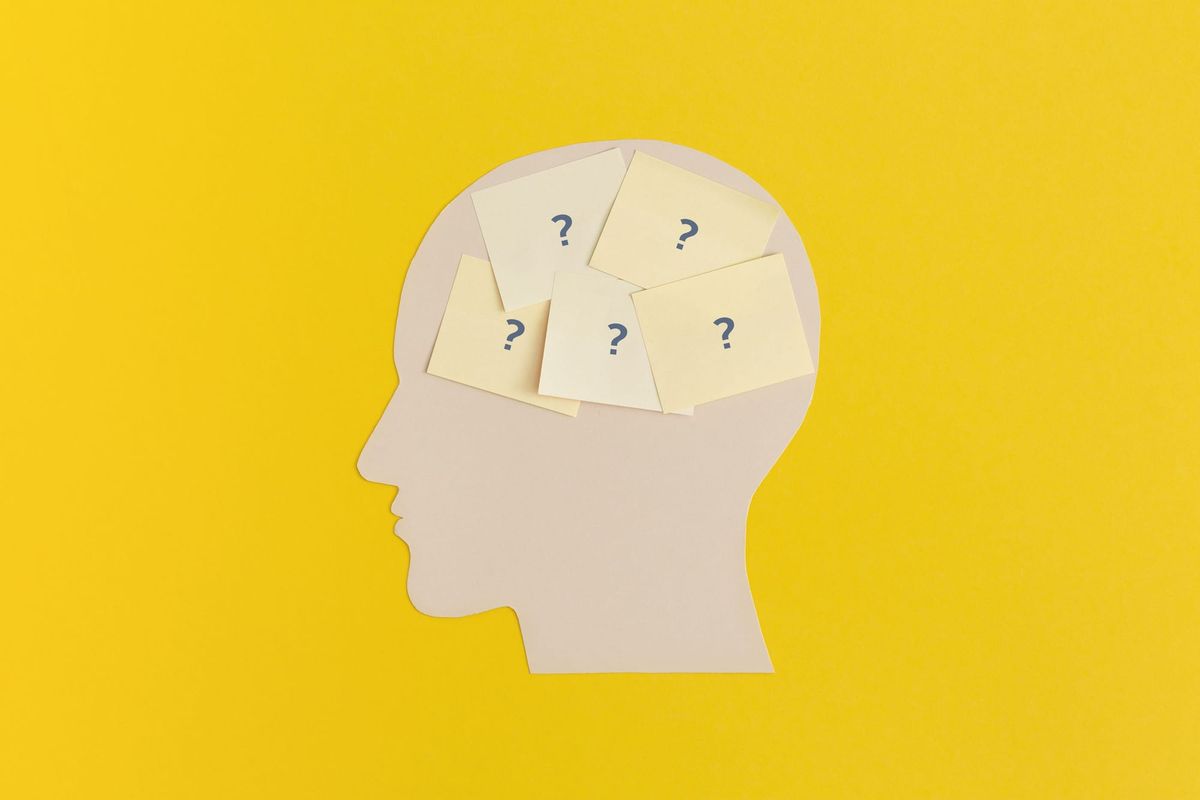
Ever spend three hours highlighting a deep dive report, only to realize forty-eight hours later that you cannot recall a single actionable statistic? It feels like your brain has a leaky bucket for new information. You are not getting older or losing your edge.
Rather, you are just feeding your brain the wrong kind of data. Generally, we treat our brain like a digital hard drive, expecting it to save raw data exactly as we consume it. Unfortunately, our biology is actually wired for the campfire. Let’s look at why our memory is failing and how the Story Bridge technique can help turn us into a mental time traveler, locking in knowledge for good.
Why Your Brain Purges 90% of What You Read
The frustration of forgetting is not a character flaw. It is a biological filter. To survive in an age of information saturation, your brain has become an expert at deleting noise. If you want to stop this, you have to understand the two filing systems in your head.
Semantic vs. Episodic Memory Systems
- Semantic Memory — You can think of this as your mental thesaurus. It is the place where you store dates, names, formulas, and dry business metrics. This memory is abstract, cold, and notoriously difficult for the brain to prioritize.
- Episodic Memory — This is your mental time travel. Episodic Memory stores your personal experiences, sensory details, and emotions. Simply put, you do not memorize the day you landed your first big client. You possess it because it was an episode you lived through.
The 2026 Neural Bridge Discovery
The new neuroscience research has changed how we understand these systems. Although we once thought that they lived in separate silos, scans of high-capacity learners show that they use the same neutral pathways to retrieve both at once.
Our brain has a low-priority filter. Meaning that if a piece of information is strictly semantic, like a flat number, the brain marks it for deletion during the next sleep cycle. Whereas if the data is tied to a survival or social story, it is stored in long-term storage.
The Alchemy of Information — Adding Flesh to the Skeleton
If you want to retain your information, you will need to perform a cognitive upgrade. You will need to move away from being just a recorder of facts to being an architect of lore.
The Semantic Scaffold
However, you still need facts, since they are the skeleton of your knowledge. And without a baseline of accurate information, your insights lack authority. Yet, skeletons are hard to recognize from a distance and even harder to care about. Accuracy is the starting point, but it is not the retention strategy.
The Episodic Flesh
To make that skeleton recognizable, you must add flesh. This means adding texture, emotion, and context.
- The Sensory Layer — When you learn something new, attach it to a where and a when. The brain is geographically focused. It remembers places far better than it remembers pages.
- The Emotional Stake — The amygdala acts as the save button for the hippocampus. If you do not feel something about the data, your brain assumes it is irrelevant.
- Defining Personal Lore — This is the transition from professional data to personal narrative. Stop saying the market grew by five percent. Start saying Tuesday, we realized we were finally winning.
The Three-Step Bridge — Engineering Unforgettable Insights
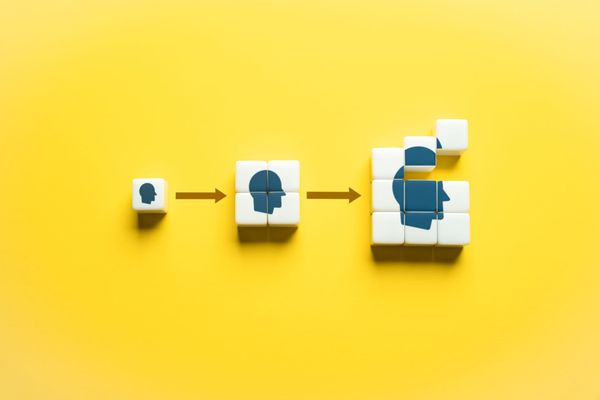
The Story Bridge is a manual protocol that allows you to move data from the fragile semantic shelf to the potent episodic shelf.
1. The Character Anchor
Stop thinking in abstractions. Data doesn't exist in a vacuum. It impacts people.
- Create a Protagonist — If what you are learning about is a new tax law, don't just read the code. Try to envision the worried founder of a company who has to deal with it.
- Sympathize — For a moment, try to feel the stress or relief of this person. Once you've anthropomorphized a piece of data as someone's problem, you can create a "social anchor" that the brain is wired to retain.
2. Location Tagging
This is a modern twist on an ancient practice.
- Info Placement — When you are reading or learning, place the information in a particular physical space that you are familiar with, such as your favorite coffee shop or your childhood home.
- Spatial Recall — When you need the information later, do not try to remember the number. Instead, go into that space. You will find the information sitting there just as you left it.
3. The Narrative Arch
Try to connect the information with a conflict and a resolution. Our brains are natural narrative machines, which is why they generally struggle to keep lists but thrive on a story.
- The Formula — Use the structure: We knew Fact A, which caused Conflict B, resulting in Outcome C.
- The Bridge — By framing a technical skill as a solution to a past struggle, you bridge the time travel gap. This makes the new knowledge part of your own history.
The Seven-Day Challenge — Lock in Your Knowledge
You don’t need more hours to study; what you need is a better quality of engagement. Here are a few concrete things you can do this week to start building your bridges.
The One Sentence Lore Rule
Don’t just walk away after a reading session or a meeting. Spend at least sixty seconds writing one sentence that connects the most important statistic to a personal memory or even a future goal. This simple practice forces your brain to prioritize the data.
Narrative Note-Taking
Ditch the sterile bullet points. Instead, try writing your meeting notes like a mini story with what happened next. This approach forces your brain to process the logic rather than just recording the words. It turns those few dry minutes into a memorable sequence of events.
The Dinner Table Test
Share one complex, technical concept that you’ve learned this week with a friend or partner using a metaphor from your own childhood. If you can bridge it to your past, you have unlocked it in your future. Having personal contact makes it easier to learn permanently.
Stop Remembering, Start Possessing
Don’t treat your brain like a hard drive; treat it like a living story. Stop trying to force store data in it and start building lore. When you actually experience the knowledge with the help of a story bridge, you stop being a student and become a master.
Don’t miss the next post. Subscribe to the newsletter for updates and exclusive content.