The Google Effect — Re-Wilding Your Brain in the Age of Digital Amnesia

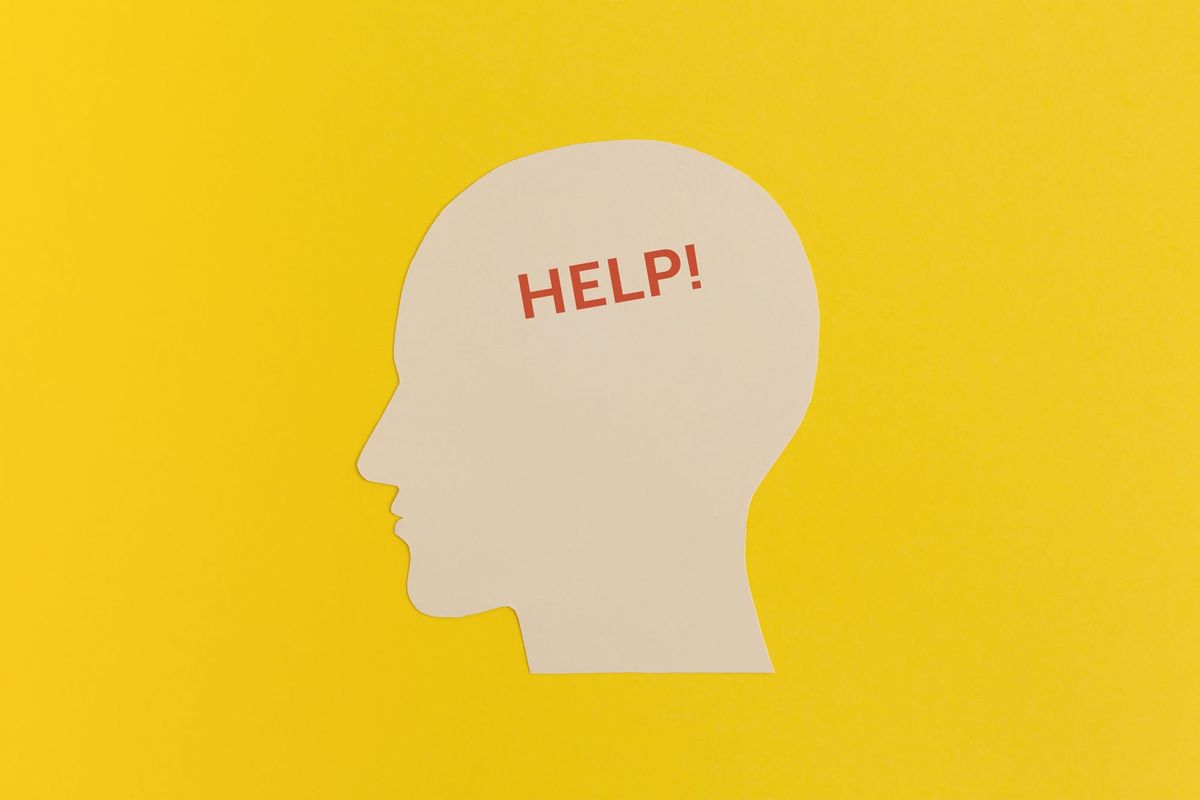
You have just completed an outstanding article, yet ten minutes later, you cannot remember the key takeaway without referring back to your browser history. It is an experience familiar to many modern knowledge workers. We are ingesting more information than any previous generation has before us, yet somehow retaining less. We are not losing our intelligence.
We are losing our internal storage. This is called the Google Effect. The brain recognizes that the data is readily available elsewhere, so it stops bothering to store the data. Let us now consider how you can transition from being a surface-level searcher into a deep-level knower.
Why Your Brain Stopped Trying to Remember
Our brain is a biological energy saver. It is continuously looking for ways to reduce its workload, if your brain perceives that a fact is easily accessible through a search bar, it will not expend the metabolic energy required to store that fact in your long-term memory.
The Cognitive Offloading Phenomenon
Cognitive offloading is the act of using physical tools to reduce the mental demand of a task. In the past, this meant using a calculator for complex math or a paper map for navigation. Today, it means using a smartphone for almost everything. If a search bar is always two seconds away, the hippocampus marks incoming data as low priority. This prevents the information from ever moving from your short-term awareness into your permanent knowledge base.
The Transactive Memory Shift
We have shifted from remembering facts to remembering where the facts are kept. This is known as transactive memory. While it is efficient to know which folder holds a specific report, relying on this for everything has a cost. By 2026, our constant connectivity has made it difficult to form original, creative connections between ideas. If the ideas do not live inside your head, they cannot collide with each other to create something new.
Why You Read a Lot But Know Very Little
Many people fall into the trap of thinking that because they have access to information, they actually possess the knowledge. This is a dangerous illusion that can hinder your professional growth.
The Illusion of Knowledge
There is a major difference between accessing information and acquiring knowledge. Digital amnesia creates a shallow level of understanding. You might feel like you understand a topic while you are reading about it online, but that understanding often falls apart during high-stakes decision-making. If you cannot recall the foundational principles of your industry without a search engine, you do not truly know your craft.
The Connection Deficit
True innovation comes from the collision of ideas inside your head, not in a cloud-based app. Offloading your memory to your devices prevents the incubation phase of the creative process. This is the period where your subconscious mind works on a problem in the background.
If the data is not stored internally, the subconscious has nothing to work with. Research from 2026 suggests that digital-first researchers struggle with complex problem-solving because they lack the high internal recall necessary for deep synthesis.
The Memory-First Rule — Building Your Internal Library
To achieve this, you need to exercise your memory by treating it as a muscle that needs exercise. This can be achieved by implementing the Memory-First Rule. This rule demands that you attempt internal retrieval before external ones.
The 60-Second Retrieval
- Before you turn to a search bar to retrieve an answer you once knew, make your brain struggle for sixty seconds.
- This is called 'desirable difficulty.' The more your brain works to retrieve a piece of information to the surface, the stronger your neural pathways are.
- Even if you are unable to retrieve a piece of information you are looking for, the struggle to search internally will make your brain more likely to retain the information once you search for it externally.
Semantic Encoding
- Rather than simply bookmarking the link or clipping the article, take the time to perform semantic encoding.
- Write a summary of why this information is important to you and how it relates to your current projects.
- By putting the information into your own words, you are moving from a state of passive consumption to active synthesis. This sends a message to your hippocampus that this information is worth storing.
The Digital Sabbatical
- Set aside specific blocks of your workday when you are forbidden from using search engines.
- During those blocks, you must rely completely on your own internal index for problem-solving and content creation.
- This keeps your brain sharp and forces it to be less dependent on the digital safety net. It challenges you to develop a more robust and interconnected internal knowledge base.
Reclaim Your Cognitive Depth This Week
You can start re-wilding your memory by introducing small delays and changes to your digital habits.
The Search Delay
Set a firm rule to never Google a fact you once knew until you have tried to recall it for one full minute. This simple habit rebuilds the habit of internal searching.
The Handwritten Summary
Choose one complex article each day and summarize the key points by hand in a physical notebook. Physical writing has been shown to improve mental encoding far more effectively than digital clipping or typing.
The No-Tab Hour
Work for at least one hour every day with only one browser tab open. This removes the temptation to jump from one search to another and forces your brain to stay focused on the task at hand without a safety net.
Trade Your Search Bar for a Mind of Your Own
Your brain is not a bookmark folder. It is meant to be a deep well of understanding and creativity. While external tools are useful for storage, they cannot replace the power of internal recall. A deep mind is a creative mind, one capable of making the unique connections necessary for true innovation. It is time to re-wild your memory. Turn your disorganized data back into unshakeable knowledge. Build a mind that works for you, not your devices.
Don’t miss the next post. Subscribe to the newsletter for updates and exclusive content.